
- Source Home Furniture
- Source Kitchen Furniture
- Source Bathroom Furniture
- Source Hospitality Furniture
- Source Office Furniture
- Source Outdoor Furniture
- Source Educational Furniture
- Source Healthcare Furniture
- Source Lighting
- Source Baby Kids Furniture
- Source Retail Showroom Furniture
- Source Commercial Furniture
- Source Contract & Event Furniture
- Source Decor
- Source Pet Furniture
- Source Public Furniture

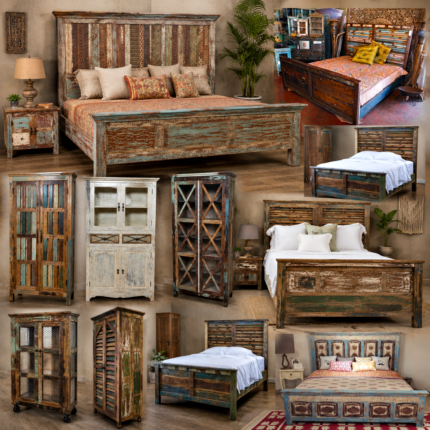
Reclaimed Furniture — Where Sustainability, Material Authenticity, and Design Intelligence Converge
Reclaimed furniture occupies a unique position in the global furniture market — the only style category where the material itself is the product's most powerful commercial differentiator, and where the history embedded in the wood, metal, or other salvaged material is not a secondary characteristic but the essential commercial proposition. A reclaimed teak dining table made from the timbers of a demolished colonial warehouse is not simply a table in a rustic style. It is a material object with genuine provenance, with measurable environmental credentials, with the visual character of aged wood that no new timber can replicate, and with a story that the buyer can tell — to guests, to clients, to customers — with full authenticity.
This combination of sustainability, material authenticity, and narrative depth has made reclaimed furniture one of the most commercially active and fastest-growing style categories in the global furniture market over the past two decades. The furniture market has moved in this direction because the buyers who matter most to the premium home, hospitality, and commercial design segments have moved in this direction — driven by environmental awareness, by a growing appetite for material authenticity and honest making, and by a design intelligence that recognises the aesthetic superiority of genuinely aged and naturally patinated materials over any manufactured approximation.
At Suren Sourcing, the reclaimed furniture category is being built to connect international buyers with the manufacturers, workshops, and suppliers who work genuinely with salvaged and reclaimed materials — producers who can speak authentically about the provenance of their timber, the sources of their steel, and the production processes through which salvaged materials are transformed into furniture of genuine quality, character, and environmental integrity. As listings grow in this category, buyers will find a curated directory of reclaimed furniture producers from the origins — India, Indonesia, Brazil, Vietnam, and beyond — that have the most significant and most commercially accessible reclaimed material traditions.
What Is Reclaimed Furniture? Definitions, Standards, and What to Look For
Reclaimed furniture is one of the most frequently misrepresented categories in the home furnishings market, and buyers sourcing in this style direction need to understand the distinctions between genuinely reclaimed furniture, reclaimed-style furniture, and the various points on the spectrum between them.
Genuinely Reclaimed Furniture
Genuinely reclaimed furniture is made from materials that have had a previous functional life in a different application — timber salvaged from demolished buildings, railway sleepers removed from disused rail lines, ship timbers from decommissioned vessels, factory flooring taken up during industrial site redevelopment, old wine barrels or whisky casks, agricultural implements, shipping containers, and the full range of materials that have been recovered from their original context and repurposed into furniture. The defining characteristic of genuinely reclaimed material is that it shows the marks of its previous life — nail holes, saw cuts, bolt marks, paint residues, patina from weathering and use, and the dimensional variation and character that comes from decades or centuries of existence before its conversion into furniture.
Reclaimed furniture produced from genuinely salvaged materials carries the most powerful environmental credentials (the carbon embodied in the timber has already been sequestered, and no new trees have been felled to produce the furniture) and the most compelling narrative provenance (the railway sleeper that became your dining table was part of the Rajputana Malwa Railway; the teak in your sideboard came from a colonial warehouse in Pondicherry). These are the products that command the highest price premiums in the reclaimed furniture market and that generate the strongest customer engagement among buyers who care about sustainability and material authenticity.
Reclaimed-Style or Aged Wood Furniture
A much larger category in commercial terms is reclaimed-style furniture — furniture produced from new timber that has been artificially aged, distressed, wire-brushed, sandblasted, or otherwise treated to replicate the visual appearance of reclaimed material. This category is commercially substantial and serves a large market of buyers who want the aesthetic character of reclaimed wood without the premium pricing, supply variability, or provenance complexity of genuine reclaimed material.
Reclaimed-style furniture can be well-made and commercially appropriate for many applications — particularly where consistent colour, dimensions, and surface character are more important than genuine provenance. However, buyers should be clear about what they are purchasing and what they are representing to their own customers. Marketing reclaimed-style furniture as genuinely reclaimed is commercially and ethically problematic, and buyers building ranges or specifying for projects should verify the material status of products clearly before committing.
Sustainably Sourced New Timber with Reclaimed Aesthetic
A third category — occupying a middle position — is furniture produced from FSC-certified new timber in species and finishes that express the visual character of reclaimed material without being artificially distressed. Old-growth teak plantations in Indonesia and Myanmar, for example, produce timber with the density, colour, and grain character of the old-growth teak used in historical construction — timber that is genuinely sustainable (plantation-grown, FSC-certified) while being materially very close in character to genuinely reclaimed old-growth teak.
For buyers who need the material character of reclaimed furniture with the consistency and scalability that genuinely salvaged material cannot always provide, plantation-grown timber with natural surface character — used without artificial distressing — can be a commercially credible and environmentally responsible alternative.
The Materials of Reclaimed Furniture — A Complete Guide to What Is Sourced and Where
The reclaimed furniture category draws on a remarkably diverse palette of salvaged materials, each with its own sourcing geography, material characteristics, and furniture-making applications.
Reclaimed Teak
The most commercially active and widely sourced reclaimed wood in the global furniture market. Reclaimed teak is salvaged primarily from two sources: demolished colonial-era buildings in India, Sri Lanka, Myanmar, and Indonesia (where teak was used extensively for structural timbers, flooring, and architectural joinery during the British, Dutch, and Portuguese colonial periods); and decommissioned teak boats and river vessels (particularly from the rivers and coastal waters of Southeast Asia, where teak was the standard boat-building timber for centuries). Reclaimed teak from these sources is among the most materially exceptional timber available anywhere — old-growth teak with density, oil content, and figure that plantation-grown contemporary teak cannot approach, and with the additional visual character of weathering, use patination, and the marks of its previous life.
Indian manufacturers in Rajasthan and the broader North Indian furniture corridor, and Indonesian manufacturers in Central Java, are the primary global sources for furniture made from reclaimed teak. The best Indian and Indonesian reclaimed teak furniture producers have established relationships with building demolition contractors, heritage property developers, and salvage yards that give them consistent access to high-quality reclaimed timber and allow them to provide provenance documentation to buyers who require it.
Reclaimed Railway Sleepers and Industrial Timber
Railway sleepers — the heavy rectangular timbers used as cross-ties on rail lines — are one of the most distinctive and commercially recognisable reclaimed wood types in the furniture market. Teak and sal wood railway sleepers from the Indian subcontinent are particularly prized for their exceptional density and durability (a teak railway sleeper must survive decades of mechanical load, weather exposure, and treated preservative chemicals while remaining structurally sound — qualities that translate into furniture of extraordinary solidity and longevity), the distinctive visual character of weathered, patinated, chemically treated wood, and the iconic provenance narrative of the Indian railway system.
Reclaimed railway sleeper furniture — dining tables, benches, coffee tables, and the broad range of case goods and occasional furniture that can be produced from these exceptionally dense and dimensionally consistent timber sections — is one of the most commercially active reclaimed furniture product types globally, and Indian manufacturers are the most significant global producers of this specific material type.
Reclaimed Ship Timber and Boat Wood
Timber salvaged from decommissioned boats, fishing vessels, and river craft — primarily from India, Indonesia, Vietnam, and the coastal regions of Southeast Asia — offers a particularly evocative and materially rich reclaimed furniture opportunity. Ship timbers are typically teak or other tropical hardwoods, selected for their strength and durability in marine conditions, and they carry the distinctive marks of marine use: rope grooves, bolt holes, caulking residues, paint layers, and the bleached and weathered surface patina of wood that has spent years in sun, salt, and water. Ship timber furniture has a particular resonance among buyers drawn to the maritime and industrial aesthetic, and it is a strong product direction for manufacturers in Indian and Indonesian coastal regions with access to decommissioned vessels.
Reclaimed Barn Wood and Agricultural Timber
In Europe, North America, and parts of South America, reclaimed barn wood — timber salvaged from the demolition of old agricultural buildings, including barns, farm sheds, granaries, and rural outbuildings — is the most commonly available and widely used reclaimed timber type. Aged oak, elm, pine, and chestnut from European agricultural buildings, and the broad range of species found in American barns and farm structures, offer furniture makers a palette of genuinely aged, naturally patinated timbers with the warm, weathered aesthetic most associated with the farmhouse and rustic interior styles that overlap significantly with the reclaimed furniture category.
Reclaimed Factory Flooring
Industrial-scale reclaimed timber flooring — salvaged from old factories, warehouses, mill buildings, and institutional structures during demolition or renovation — is a significant source of large-format timber sections suitable for furniture production. The heavy-duty hardwood flooring used in industrial buildings from the late nineteenth century through the mid-twentieth century — typically oak, maple, or pine in North America and Europe, teak in colonial Asia — was laid in thick sections designed to survive decades of heavy industrial use, and it retains extraordinary quality and dimensional stability when salvaged and repurposed into furniture.
Reclaimed Metal — Industrial Iron, Steel, and Brass
Reclaimed furniture is not limited to wood. Industrial iron and steel salvaged from old machinery, railings, architectural ironwork, ship parts, and the full range of metal objects that accumulate in demolition and salvage operations are increasingly being incorporated into furniture production — as table bases, shelving frames, chair legs, and decorative structural elements. Reclaimed brass and copper from old plumbing fixtures, electrical equipment, and architectural fittings are similarly incorporated into high-end reclaimed furniture with a metalwork dimension. The combination of reclaimed wood and reclaimed metal — the teak railway sleeper table top set on a base fabricated from salvaged iron railway track sections, for example — is one of the most design-intelligent and commercially compelling expressions of the reclaimed furniture aesthetic.
Reclaimed Architectural Elements
Doors, window frames, roof timbers, decorative carved panels, and the full range of architectural salvage elements — removed from old buildings during demolition or renovation — are incorporated into furniture production by the most creative reclaimed furniture makers. Antique Indian carved wooden doors repurposed as dining table tops or headboards, old window frames converted into mirror or picture frames, carved stone lintels used as coffee table bases — these are the most individually distinctive and highest-value products in the reclaimed furniture category, and they are the area where Indian manufacturers in Rajasthan and Gujarat — the world's richest source of antique architectural salvage — have the most commercially irreplaceable access to raw material.
Why Reclaimed Furniture Resonates So Powerfully in the Contemporary Market
The commercial strength of reclaimed furniture is not a passing trend — it reflects a set of deeply rooted cultural, environmental, and aesthetic values that are becoming more rather than less important to the buyers who drive premium furniture demand globally.
Environmental Credentials That Are Genuinely Verifiable
Reclaimed furniture's environmental case is straightforward and powerful: no new trees are felled to produce the furniture, the embodied carbon in the timber has already been sequestered, and the material is diverted from landfill or incineration into a high-value functional product with a substantially extended useful life. In a furniture market where "sustainable" claims are frequently made and rarely verified, reclaimed furniture's environmental credentials are among the most concrete and defensible available — making it particularly compelling for buyers operating under corporate sustainability policies, ESG reporting requirements, or consumer-facing sustainability commitments.
Material Authenticity in an Age of Imitation
The contemporary design market has a sophisticated and growing understanding of the difference between genuine and imitation material authenticity — between furniture made from genuinely aged, genuinely reclaimed timber and furniture that has been artificially distressed to resemble it. For buyers serving design-literate consumers who can tell the difference and are willing to pay a significant premium for the genuine article, reclaimed furniture offers a material authenticity proposition that no amount of artificial distressing can replicate.
The Narrative Value of Provenance
Furniture with a genuine story — the dining table made from the timbers of a specific demolished railway station, the sideboard whose teak came from a colonial warehouse in Cochin, the coffee table whose railway sleepers were part of a specific disused branch line — commands a price premium that is fundamentally different from the premium associated with brand or design prestige. It is a premium rooted in genuine uniqueness and verifiable provenance, and it is one that grows in value as environmental awareness and the appetite for authentic material stories deepens among the buyers who constitute the most commercially significant segments of the premium furniture market.
The Aesthetic of Genuine Age
There is a visual quality to genuinely reclaimed and aged timber that artificial distressing techniques cannot replicate — the depth of patina that develops over decades of exposure to light, air, and use, the variation in colour and surface character that reflects the specific conditions of the timber's previous life, the density and figure of old-growth wood that plantation-grown timber simply does not develop in the same time periods. For buyers and their customers who have an educated eye for materials — and there are more of them than most furniture marketers assume — this visual quality is immediately apparent and immediately valued.
The Best Global Sourcing Origins for Reclaimed Furniture
India — The World's Most Significant Reclaimed Furniture Source
India is, by a considerable margin, the world's most important and most commercially accessible source of genuinely reclaimed furniture. The reasons are structural and material. India's vast stock of colonial-era buildings — constructed in teak, sal, sheesham, and other tropical hardwoods during the British and pre-British periods — is being steadily demolished as the country modernises its building stock, releasing into the salvage market enormous quantities of genuinely old-growth timber of exceptional quality. India's railway network — the world's fourth largest, constructed extensively in teak during the colonial period — generates a continuous supply of decommissioned teak and sal railway sleepers as the network is modernised and metre-gauge lines are converted or closed. And India's coastal regions provide access to decommissioned traditional fishing boats and river craft in teak, creating a marine timber salvage tradition that has been commercially active for decades.
The artisan furniture manufacturing clusters of Rajasthan — Jodhpur, Jaipur, and the surrounding villages — have built a world-class capability in working with reclaimed and antique materials. The jodhpur furniture cluster in particular is recognised globally for its ability to source, process, and transform genuinely salvaged Indian timber into furniture of design quality and export-ready commercial presentation. Indian reclaimed furniture manufacturers serving the international market are the most commercially mature and most internationally accessible in the global reclaimed furniture landscape, and they represent the most important sourcing opportunity for buyers building reclaimed furniture ranges for the European, American, Australian, and Gulf markets.
Indonesia — Reclaimed Teak and Javanese Timber Heritage
Indonesia's vast colonial-era building stock — constructed extensively in teak during the Dutch colonial period across Java, Sumatra, and the other islands — is the second most significant global source of genuinely reclaimed furniture timber. Javanese reclaimed teak furniture — produced in the furniture workshops of Jepara and the broader Central Javanese furniture cluster — is internationally recognised for its quality, its material authenticity, and the depth of provenance available in the Indonesian reclaimed timber market. Indonesian reclaimed furniture is particularly active in the Australian and European markets, where buyers have established long-standing relationships with Jepara manufacturers specialising in reclaimed teak production.
Vietnam — French Colonial Salvage and River Timber
Vietnam's French colonial building heritage — the grand villas, administrative buildings, and commercial structures of Hanoi and Ho Chi Minh City, many of which are being demolished or renovated as the cities modernise — is releasing a growing supply of colonial-era timber into the Vietnamese furniture manufacturing sector. Vietnamese manufacturers in the Binh Duong and Dong Nai furniture clusters are increasingly developing reclaimed timber capabilities, and the country's river traditions provide access to old boat timber similar to the marine reclaimed timber available in India and Indonesia.
Brazil — Native Forest Salvage and Reclaimed Tropical Timber
Brazil's extraordinary biodiversity makes it an important but complex source for reclaimed tropical timber. Timber salvaged from old buildings, demolished structures, and legally permitted land clearing operations in Brazil can include species of exceptional quality — including genuine old-growth mahogany, jacaranda, and other tropical hardwoods that are no longer available from forest sources. Brazilian manufacturers working with genuinely reclaimed tropical timber offer furniture of exceptional material quality and sustainable credentials, but buyers should verify provenance and legal documentation carefully given the regulatory complexity of the Brazilian timber market.
Europe — Reclaimed Oak, Pine, and Architectural Salvage
European reclaimed furniture — produced from reclaimed oak and pine barn wood, reclaimed factory flooring, and the architectural salvage of demolished European farm buildings and industrial structures — serves primarily the European domestic market and the export market for farmhouse, rustic, and industrial-aesthetic furniture. European reclaimed furniture manufacturers are typically smaller in scale than their Asian counterparts but produce furniture of genuine craft quality from genuinely regional reclaimed materials, and they serve buyers who need EU-origin reclaimed furniture with full material traceability.
Reclaimed Furniture Product Types — The Complete Commercial Landscape
Reclaimed furniture encompasses a wide range of product types spanning most major furniture categories.
Reclaimed Wood Dining Tables
The reclaimed dining table — most typically a large-format slab or plank-top table in reclaimed teak, railway sleeper wood, or reclaimed barn oak — is the single most commercially active product type in the reclaimed furniture category globally. The combination of material authenticity, impressive scale, and the social and narrative resonance of a genuinely provenance-rich dining table makes this the product that most clearly communicates the commercial proposition of the reclaimed furniture category to buyers and consumers. Indian and Indonesian manufacturers producing reclaimed teak dining tables for the international market are the most commercially mature and widely traded source for this product type.
Reclaimed Wood Sideboards and Storage
Sideboards, credenzas, console tables, and storage units produced from reclaimed timber — typically combining reclaimed wood panels or plank fronts with solid reclaimed timber construction — are a high-volume product category in the reclaimed furniture market, serving both the residential and commercial interior design segments. The combination of generous storage utility with the visual character of genuinely aged timber makes reclaimed wood storage furniture one of the most consistently popular product types across the major reclaimed furniture markets.
Reclaimed Wood and Metal Coffee Tables and Occasional Tables
Coffee tables combining reclaimed timber tops with industrial metal bases — fabricated from reclaimed iron pipe, railway track sections, or structural steel — are among the most commercially active and design-distinctive products in the reclaimed furniture market. The material combination captures both the warmth of aged wood and the industrial character of salvaged metal in a single piece that communicates the reclaimed aesthetic with particular clarity.
Reclaimed Wood Beds and Bedroom Furniture
Bed frames in reclaimed timber — from simple plank-construction platform beds to more architecturally ambitious four-poster designs in heavy reclaimed teak — serve the premium residential market where buyers are investing in bedroom furniture with genuine material quality and design character. Reclaimed teak bedroom furniture from Indian and Indonesian manufacturers is particularly active in the Australian, British, and European markets.
Reclaimed Wood Shelving and Bookcases
Wall-mounted shelving systems and freestanding bookcases in reclaimed timber are a consistently popular product type in both the residential and commercial markets — serving the premium home office, the design-led workspace, and the boutique retail and hospitality environments where the reclaimed aesthetic is increasingly specified as a brand-defining design direction.
Architectural Salvage as Furniture
The conversion of specific antique architectural elements into functional furniture — carved temple doors into dining tables, old window frames into mirrors, stone column capitals into lamp bases, ornate carved panels into headboards — is the most individually distinctive and highest-value segment of the reclaimed furniture market. Indian manufacturers in Rajasthan, with their extraordinary access to antique architectural salvage from the demolished havelis, temples, and palaces of the region, are the most important global source for this product category.
What to Look for When Sourcing Reclaimed Furniture — Buyer's Checklist
Provenance Documentation
For genuine reclaimed furniture, ask for documentation of the timber's previous use — photographs of the source building or structure, demolition permits, railway department documentation for sleeper wood, or maritime decommissioning certificates for boat timber. The best Indian and Indonesian reclaimed furniture manufacturers maintain provenance files for their timber sources and can provide documentation to buyers who require it.
Treatment and Processing Standards
Genuinely reclaimed timber requires careful processing before it can be used in furniture — removal of embedded hardware (nails, bolts, screws), kiln drying to stabilise moisture content, milling to dimensional consistency, and surface treatment to stabilise and protect while preserving the character of the aged patina. Ask manufacturers to describe their timber processing methods in detail, and verify that kiln drying is part of their standard process — furniture made from insufficiently dried reclaimed timber will move, crack, and deteriorate significantly in climate-controlled interior environments.
Structural Integrity
Reclaimed timber can contain hidden defects — internal rot, insect damage, structural weakening from previous bolt or nail penetrations — that are not visible on the surface. The best reclaimed furniture manufacturers assess their timber carefully before use, rejecting or working around compromised sections, and they construct furniture with joinery methods appropriate to the specific character of the reclaimed material being used. Ask for quality assurance information about how structural issues in reclaimed timber are identified and addressed.
Finish Specification
The surface treatment of reclaimed furniture requires particular care — the goal is to stabilise and protect the material while preserving the aged patina and natural character that is the material's primary aesthetic asset. Heavy lacquer or polyurethane finishes that seal the surface completely and give it a uniform sheen undermine the natural character of the reclaimed material. The best reclaimed furniture manufacturers use penetrating oil finishes, natural wax, or light water-based sealers that protect the surface while allowing the material to retain its natural texture, colour variation, and character. Specify surface treatment requirements clearly when evaluating manufacturers.
Consistency Across Orders
Reclaimed furniture's most significant commercial challenge for buyers building retail ranges or specifying at volume is consistency — because genuinely reclaimed material is by definition variable, no two pieces can be precisely identical, and significant variation between pieces in the same product line can create commercial problems for retailers and specifiers accustomed to the uniformity of conventionally manufactured furniture. The best reclaimed furniture manufacturers manage this variability professionally — working within defined ranges of colour, character, and dimension variation, communicating these ranges clearly to buyers, and ensuring that variation is perceived as an authentic characteristic rather than a quality defect.
Reclaimed Furniture in the Hospitality and Commercial Sectors
The reclaimed furniture aesthetic has found particularly strong commercial expression in the hospitality and commercial design sectors — where designers and operators are using reclaimed materials as a primary tool for creating environments of genuine character, warmth, and environmental credibility.
Boutique hotels, farm-to-table restaurants, craft breweries, coffee shops, co-working spaces, and the full range of hospitality and commercial environments that have built their brand identity around authenticity, sustainability, and quality have adopted reclaimed furniture as a defining interior element. The reclaimed teak dining tables of a Rajasthani heritage hotel, the railway sleeper bar counter of a craft beer restaurant, the reclaimed barn oak shelving of a high-end coffee roaster's retail space — these are not simply design decisions. They are brand commitments, sustainability statements, and narrative investments that communicate the values of the business to every customer who walks through the door.
For hospitality and commercial buyers, reclaimed furniture from Indian and Indonesian manufacturers offers a particularly compelling combination of genuine sustainability credentials, distinctive material character, and competitive pricing relative to equivalent quality in new timber furniture — making it not just an aesthetically superior choice but a commercially intelligent one.
List Your Reclaimed Furniture Company on Suren Sourcing
This directory category is actively growing and represents one of the most commercially timely and values-aligned style categories on the platform. If you manufacture furniture from genuinely reclaimed or salvaged materials — railway sleepers, colonial building timber, ship wood, factory flooring, barn wood, or any other salvaged material — Suren Sourcing invites you to list your company and connect with the international buyers, interior designers, hospitality operators, and retailers who are actively seeking the genuine provenance, material authenticity, and environmental integrity that real reclaimed furniture uniquely offers.
To list your reclaimed furniture company, contact us at surensourcing@gmail.com
Explore Related Categories on Suren Sourcing
- Source Rustic Furniture — The closest stylistic neighbour to reclaimed furniture — sharing the natural material philosophy, honest construction values, and warm, lived-in aesthetic character that defines both directions, often from the same manufacturers and sourcing origins.
- Source Industrial Furniture — Reclaimed metal and the combination of reclaimed wood with industrial steel and iron are defining elements of the industrial furniture aesthetic, creating substantial overlap between these two style categories in both product types and sourcing origins.
- Source Furniture from India — The world's most important and most commercially accessible source of genuinely reclaimed furniture, with Indian manufacturers in Rajasthan and the broader North Indian furniture cluster having the deepest access to colonial-era teak, railway sleeper timber, and architectural salvage.
- Source Furniture from Indonesia — The second most significant global source for reclaimed teak furniture, with the Jepara furniture cluster in Central Java producing internationally recognised reclaimed teak pieces for the European, Australian, and North American markets.
- Source Home Furniture — The primary residential market for reclaimed furniture, where the style's material authenticity, environmental credentials, and sense of genuine character serve buyers seeking furniture that brings real substance and provenance to their living environments.
- Source Hospitality Furniture — The commercial sector where reclaimed furniture has found its strongest brand-aligned application — boutique hotels, farm-to-table restaurants, craft hospitality operators, and design-forward commercial environments that have built their identity around authenticity and sustainability.
- Source Wabi-Sabi Furniture — A philosophical alignment with reclaimed furniture in its celebration of imperfection, the beauty of age, and the aesthetic value of materials that carry the marks of time and use — with significant product type and material overlap particularly in naturally aged wood furniture.